Winning Corporate B2B
Strategy and Vertical Wedges
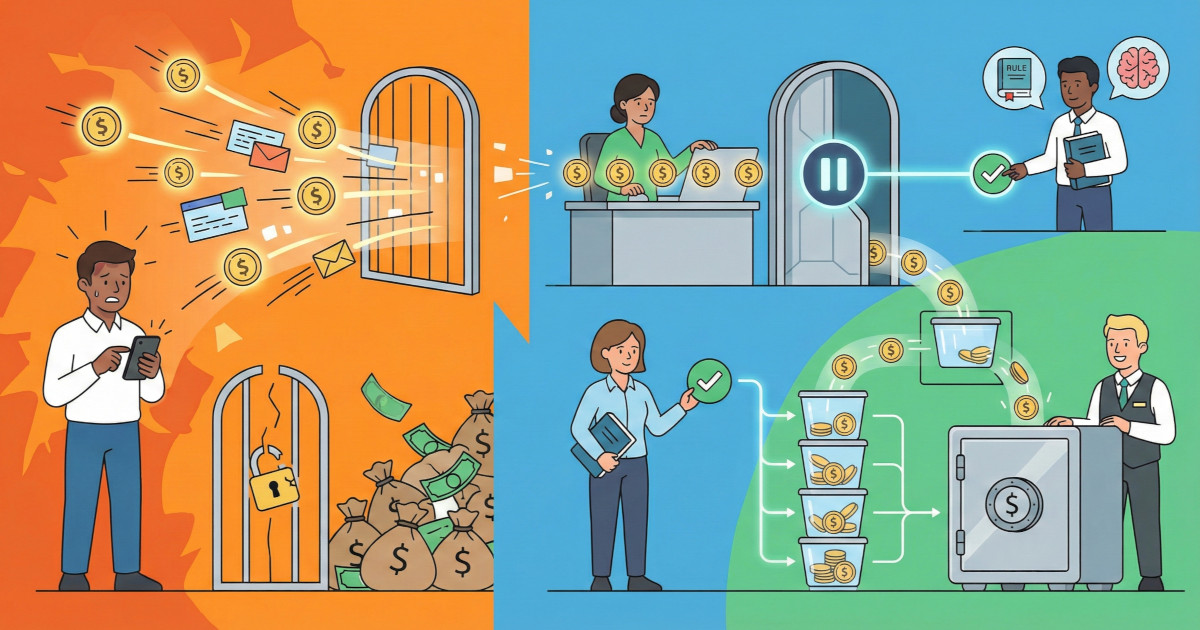
This article is part of a series on programmable authorization for corporate payments.
In the previous posts, we've established why mobile payment schemes should pursue the corporate B2B market (massive addressable market with guaranteed transaction volume) and how to build the technical infrastructure (sub-account architecture with pre-payment authorization). Now let's address the strategic questions:
How do you actually compete against entrenched corporate card programs?
Which market segments should you target first?
Let's be realistic about what you're up against—and where the wedge opportunities lie.
The Corporate Card Competitive Advantage
Corporate cards (Visa/Mastercard/Amex) have two significant commercial advantages that mobile payment schemes must overcome:
Rebates and Kickbacks
Many corporate card programs offer rebates of 0.5-1.5% of transaction volume back to the company. For a mid-sized company spending €10M annually on corporate cards, that's €50k-150k in rebates.
Why this matters: CFOs love "free money." Even if your payment scheme is faster, more convenient, and has better spending controls, the CFO will ask: "But what about the €100k rebate we're getting from our current card program?"
Payment Terms (Float)
Corporate cards typically offer 30-45 day payment terms. The company receives goods/services today but doesn't actually pay the card issuer for 30-45 days.
Why this matters: This creates working capital float. For companies with tight cash flow, this is valuable. They can receive inventory, sell it, collect payment from customers, and then pay the card bill—using their supplier's capital effectively.
The challenge for mobile payment schemes: They typically settle within 2 business days, at most. There's no built-in 30-45 day float.
How to Compete
You can't match these advantages dollar-for-dollar initially. But you can compete on:
1. Total Cost of Ownership
While cards offer rebates, they also have costs:
- Interchange fees (though capped at 0.3% in Europe, still applies)
- FX markups of 1-3% on cross-border transactions
- Annual card fees per employee
- Lost productivity from expense report friction
Your value proposition: Lower total cost through:
- Reduced FX costs for pan-regional schemes
- Elimination of expense report overhead (policy-compliant transactions auto-categorized)
- Reduced expense leakage (unauthorized spend caught before money moves)
2. Control and Compliance
Corporate cards offer basic controls (spending limits, MCC restrictions). You offer programmable authorization:
- Real-time policy enforcement (decline off-duty fuel purchases before money moves)
- Budget tracking in real-time (know instantly when approaching budget limits)
- Approval workflows (manager approves €500+ purchases via push notification)
- Audit trail (every authorization decision logged with reason)
Your value proposition: CFOs value control. Preventing one €50k unauthorized expense can justify switching, even if it means giving up a 1% rebate.
3. Specific Use Cases Where Cards Fail
This is where vertical wedges come in: markets where the card model is structurally inadequate (such as China and SE Asia where penetration is poor), making your programmable authorization the only viable solution.
Fleet 2.0 (Electric Vehicle Transition)
The Market Opportunity
Europe's commercial fleet market is undergoing forced transformation due to EU decarbonization mandates. The Fit for 55 package effectively requires companies to transition to electric vehicles over the next decade.
Market size:
- Millions of commercial vehicles across Europe
- Average €500-2,000/month per vehicle in fuel/energy spend
- Mandatory transition (regulatory requirement, not optional)
Why Legacy Fleet Cards Break
Traditional fleet cards were designed for a simple world:
- Vehicles run on diesel or petrol
- Fuel purchased at standardized gas stations
- Merchant Category Code (MCC) 5541 = "Service Stations"
- Transaction data: liters, fuel type, unit price
The EV problem:
- Mixed fleets: Some vehicles combustion, some electric, some hybrid
- Fragmented charging networks: Unlike fuel (dominated by Shell, BP, Total), EV charging is fragmented across dozens of networks (Ionity, Fastned, Tesla Superchargers, municipal providers)
- Inconsistent MCCs: Some charging stations use MCC 5541 (fuel), others use 5499 (miscellaneous), 7523 (parking), or other codes
- Lack of data standardization: No universal "kWh + charging time" data format
Result: Fleet cards that worked for 20 years suddenly can't distinguish between legitimate EV charging (€40 at MCC 7523) and unauthorized parking fees (€40 at MCC 7523).
The Programmable Authorization Solution
With sub-account architecture and pre-payment authorization, you can handle energy-agnostic fleet payments:
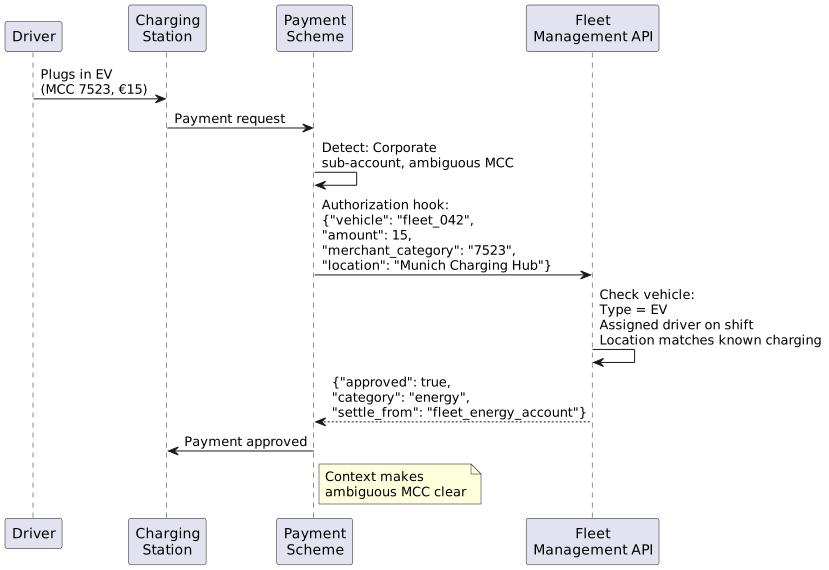
Key capabilities:
- Context-aware authorization: The payment scheme calls the corporate fleet management system, which provides context (vehicle type, shift status, location). This disambiguates unclear merchant categories.
- Unified energy spend tracking: Both diesel purchases (MCC 5541) and EV charging (various MCCs) route to the same "energy" budget category for simplified accounting.
- Fraud prevention: If a driver attempts to charge a vehicle that's currently showing as parked 200km away (per telematics), decline the transaction.
- Dynamic merchant network: Unlike fleet cards limited to pre-approved fuel stations, programmable authorization can approve transactions at any merchant if the context makes sense (EV vehicle + charging-related MCC + plausible location).
Why This is a Wedge
Fleet managers cannot solve the EV transition problem with legacy cards. The card networks and fleet card providers are locked into architectures built for fuel-only scenarios.
Your advantage: You're building from scratch with programmable authorization. You can integrate with fleet telematics systems, handle multiple merchant categories, and provide unified energy spend management.
Go-to-market:
- Partner with EV fleet consultancies and telematics providers (they're already advising fleet managers on the transition)
- Target progressive logistics companies in the Nordics (Norway, Sweden have highest EV adoption rates)
- Win 5-10 reference customers, then expand with proof points
Competitive moat: Once a fleet manager has integrated their telematics system with your authorization approval APIs and migrated 500 vehicles, switching means rebuilding all that integration. High switching costs = sticky revenue.
Healthcare and Insurance Payouts
The Market Opportunity
Healthcare spending in Europe is massive, but the payment experience is stuck in the past:
- Patients pay out-of-pocket at doctor/pharmacy
- File claim with insurance company
- Wait weeks for reimbursement via bank transfer
Market pain points:
- Cash flow burden on patients (especially for expensive treatments)
- Administrative overhead for insurers (manual claim processing)
- Fraud risk (patients submit false receipts, no real-time verification)
The Problem: No Real-Time Claims Integration
Current process:
- Patient pays €150 for prescription
- Patient submits receipt to insurance
- Insurance processes claim (days/weeks)
- Insurance reimburses patient
What's missing: The ability to approve and fund claims in real-time at point-of-sale.
The Programmable Authorization Solution
Issue sub-accounts to policyholders that are pre-restricted to healthcare spending and instantly funded when claims are approved:
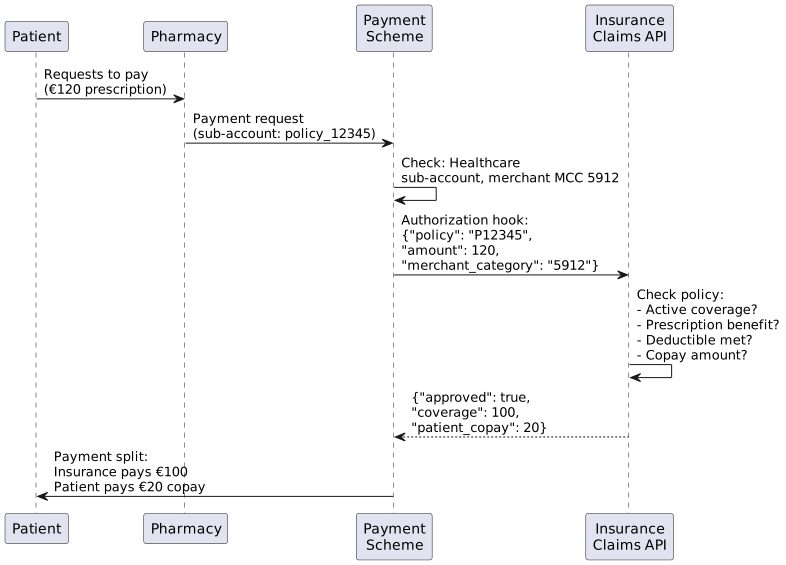
Key capabilities:
- MCC restrictions: The sub-account only works at healthcare merchants (MCC 5912 pharmacies, 8011 doctors, 8021 dentists, 8062 hospitals)
- Real-time claims adjudication: Insurance company's API performs instant eligibility check and calculates coverage amount
- Copay precision: Patient pays only their copay amount (€20); insurance covers the rest (€100) directly
- Fraud prevention: Since the sub-account is restricted by MCC and requires real-time insurance approval, fraudulent use is nearly impossible
Why This is a Wedge
Insurance companies desperately want this (current claims process is expensive and fraud-prone) but can't build it themselves:
- They don't have payment licenses
- They don't have technical expertise for card network integration
- Their claims systems are batch processors, not real-time APIs
Your advantage: You're the orchestration layer bridging legacy claims systems with instant payment rails.
Go-to-market:
- Partner with private health insurers in Switzerland and Germany (high private insurance penetration)
- Pilot with mid-sized insurer targeting their most expensive claim category (chronic conditions requiring regular pharmacy visits)
- Measure reduction in claims processing time, fraud reduction, patient satisfaction
The Beachhead Strategy: How to Enter the Market
Winning corporate B2B requires a different approach than consumer payments:
Phase 1: Pick One Vertical (Don't Boil the Ocean)
Choose the wedge where you have the strongest advantage:
- Fleet 2.0: If you operate in markets with high EV adoption (Nordics, Germany)
- Healthcare: If you have relationships with insurers or healthcare payment networks
Why focus: Each vertical requires deep domain expertise, specific integrations, and specialized sales approach. Better to dominate one wedge than be mediocre in three.
Phase 2: Land 3-5 Reference Customers
Target profile:
- Mid-market companies (500-5,000 employees or equivalent scale)
- Pain with current solution (fleet managers struggling with EV transition, insurers drowning in claims overhead)
- Willingness to be early adopter in exchange for pricing concessions
Approach:
- Offer pilot program (reduced fees or free trial period)
- Provide dedicated implementation support (your team helps them build policy APIs)
- Require commitment to case study/testimonial in exchange
Goal: Prove the technology works in production, collect reference logos, identify common integration patterns.
Phase 3: Productize the Patterns
After 6-12 months with pilot customers, you'll identify repeatable patterns:
- Common policy rules (e.g., "fuel purchases during work hours only")
- Frequently needed integrations (specific ERP systems, telematics platforms, claims processors)
- Deployment challenges (authentication, failover logic, webhook performance)
Build:
- Policy templates: Pre-built authorization logic for common use cases (copy-paste integration)
- SDK libraries: Official SDKs for corporate developers (handles signature verification, error handling automatically)
- Integration marketplace: Pre-built connectors to popular corporate systems (SAP, Workday, fleet platforms)
Result: You can now sell to the next 50 customers with less custom work—they use templates and integrations instead of building from scratch.
Phase 4: Cross-Sell and Expand
Once you dominate one vertical wedge, leverage it for expansion:
From Fleet → Other Mobility:
- Car sharing companies (dynamic authorization based on rental status)
- Micro-mobility (e-scooter operators needing sub-account per vehicle)
- Corporate travel (expense management for consultants, sales teams)
From Healthcare → Other Restricted Spend:
- Wellness benefits (gym memberships, health food—restricted by MCC)
- Education benefits (tuition reimbursement—pre-approved institutions)
- Commuter benefits (pre-tax transportation spending)
Addressing the Card Advantages
Let's revisit the competitive challenges from cards and how vertical wedges help:
Rebates Problem
Card rebate: CFO gets 1% back (€100k on €10M spend)
Your counter:
- Fleet wedge: "You're spending €500k/year on unauthorized fuel purchases (off-duty drivers). Our solution prevents 100% of that. Even with zero rebate, you save €400k net."
- Healthcare wedge: "You're spending €300k/year on claims processing labor. Real-time adjudication eliminates 80% of manual work. That's €240k saved in overhead."
The pattern: Quantify savings from waste reduction, efficiency gains, or cost avoidance. Make the business case that your total value exceeds the rebate.
Float Problem
Card float: 30-45 day payment terms = working capital benefit
Your counter:
- Offer payment terms if you have access to credit facilities (partner with banks to provide 30-day terms on corporate sub-accounts)
- Emphasize speed-to-value in specific verticals:
- Fleet: Real-time authorization prevents fraud before it hits the account (float doesn't help if unauthorized spend already happened)
- Healthcare: Patients don't care about insurer's float; they care about not paying €1,000 out-of-pocket upfront
The pattern: Either match float through financing partnerships, or demonstrate that for specific use cases, the value of real-time control outweighs the float benefit.
What This Requires (Beyond Technology)
Building the sub-account architecture is the easy part. Winning corporate B2B requires:
1. Enterprise Sales Team
Corporate sales is different from consumer growth:
- Long sales cycles: 3-6 months from first meeting to signed contract
- Multiple stakeholders: CFO, IT, Procurement, sometimes Legal/Compliance
- RFP processes: Formal vendor evaluation with security questionnaires, compliance reviews
- Proof-of-concept requirements: Pilot deployments before enterprise rollout
What you need: Sales professionals with corporate payments or enterprise SaaS experience, not consumer growth marketers.
2. Customer Success / Implementation Support
Corporate clients need hand-holding:
- Integration assistance (help them build policy APIs, test webhook logic)
- Policy design consulting (translate business requirements into authorization rules)
- Ongoing optimization (review authorization metrics, suggest policy improvements)
What you need: Technical account managers who can code-review corporate integrations and design authorization workflows.
3. Compliance and Security Posture
Corporate procurement evaluates vendors differently than consumer products:
- SOC 2 Type II audit (standard requirement for enterprise vendors)
- GDPR compliance documentation (data processing agreements, privacy impact assessments)
- Penetration testing reports (annual or on-demand security audits)
- SLA guarantees (uptime commitments with financial penalties)
What you need: Investment in compliance frameworks and security infrastructure beyond consumer product standards.
The Competitive Moat
Once you win a corporate client in one of these verticals, they're extremely sticky:
Integration lock-in:
- Corporate has built authorization policies on your APIs
- Their ERP/fleet/claims systems are integrated with your webhooks
- Switching means 6-12 months of re-implementation
Operational dependency:
- Employees/drivers/patients are using your system daily
- Business processes depend on real-time authorization working
- Migration risk is high (what if new provider has downtime during transition?)
Data and learning:
- Your system has historical authorization data (approved/declined patterns)
- Corporate has tuned policies based on months of real transactions
- New provider starts from zero
Network effects (for multi-client verticals):
- More fleet clients → better relationships with telematics providers → easier integration for next client
- More healthcare clients → insurance companies build integrations once, reuse for other employers
Closing Thoughts: Smart Pipes Are the Entry Ticket
The European corporate payments market is massive, but it's not going to be won by being "slightly faster" or "marginally cheaper" than cards.
You need to be the only viable solution for specific use cases:
- Fleet managers transitioning to EVs can't solve the mixed-energy problem with legacy cards
- Insurers can't do real-time claims adjudication without programmable authorization
These aren't incremental improvements—they're structural requirements for market entry.
The schemes that win corporate B2B will be those that:
- Verticalize ruthlessly (dominate one wedge before expanding)
- Build for enterprise sales (not consumer growth)
- Overcome card economics (quantify value beyond rebates/float)
- Create integration lock-in (sticky APIs = defensible revenue)
Build the wedge. Win the vertical. Expand the moat.
And if you're still trying to compete with cards on pure transaction speed and convenience? The CFO will take the 1% rebate and 30-day float every time.
This Series Has Covered
- Part 1: Why corporate B2B is a massive untapped market for mobile payment schemes
- Part 2: The technical architecture (sub-accounts, pre-payment authorization, intelligent routing)
- Part 3: Go-to-market strategy and vertical wedges where programmable authorization is mandatory
If you're running a mobile payment scheme and this resonates, the opportunity is real—but the window is finite. Whoever builds the corporate authorization infrastructure first in each market will capture the high-value clients before competitors can react.
This article is part of a series on programmable authorization for corporate payments.